Where wāhine gather, whānau voice follows.
As the Māori Women's Welfare League brings its 75th Anniversary National Conference to Tāmaki Makaurau, Ngaa Pou Hauora oo Taamaki Makaurau acknowledges a kaupapa that has carried the voices of wāhine Māori and their whānau since 1951.
From 7 to 11 October, wāhine Māori from across Aotearoa are gathering at the Due Drop Events Centre in Manukau for the 75th Anniversary National Conference of Te Rōpū Wāhine Māori Toko i te Ora; the Māori Women’s Welfare League. Alongside the legacy celebrations and speakers sit business workshops and a marketplace of rongōā, raranga, fashion and art.
It is a gathering of kuia, māmā, tamāhine and mokopuna; women who have led peka, raised whānau and stood up at hui to get things done. For Ngaa Pou Hauora, the Iwi Māori Partnership Board for Tāmaki Makaurau, having this kaupapa in our takiwā matters.
A voice built from the ground up
Founded in 1951, as many whānau moved from their tūrangawaewae into towns and cities, the League gave Māori women a way to organise and speak for the needs of their whānau. That purpose has held. Through peka across Aotearoa and beyond, members work at flax-roots level alongside whānau, hapū and iwi. They know what whānau are facing because they are there.
In the 1980s, the League’s Rapuora report gathered the experiences of Māori women and put them in front of decision-makers. Long before the phrase was common, that was whānau voice in action.
Mana wāhine and the wellbeing of whānau
Wāhine Māori are often the ones navigating the health system for others; booking appointments for pāpā, sitting with a sick tamaiti, supporting a kuia through treatment. They see where it works and where it lets whānau down. That knowledge should shape how services are designed, delivered and held to account.
For Kandi Ngataki, who chairs Ngaa Pou Hauora and leads the League’s Tāmaki Makaurau region, the two kaupapa are asking the same question.
“Are our whānau being heard? The League has always known the answer starts with wāhine,” she says. “Mana wāhine isn’t a slogan. It’s the wāhine who hold our whānau together at the marae, in the community and at home. Their voices belong at the centre of hauora decisions, not on the edges.”
Why being present matters
The role of Ngaa Pou Hauora oo Taamaki Makaurau is to make sure whānau voice doesn’t stop at the conversation. We listen, work to understand whānau experiences of the health system, monitor whether it is delivering for Māori, and use what we learn to influence change. Then we report back and listen again.
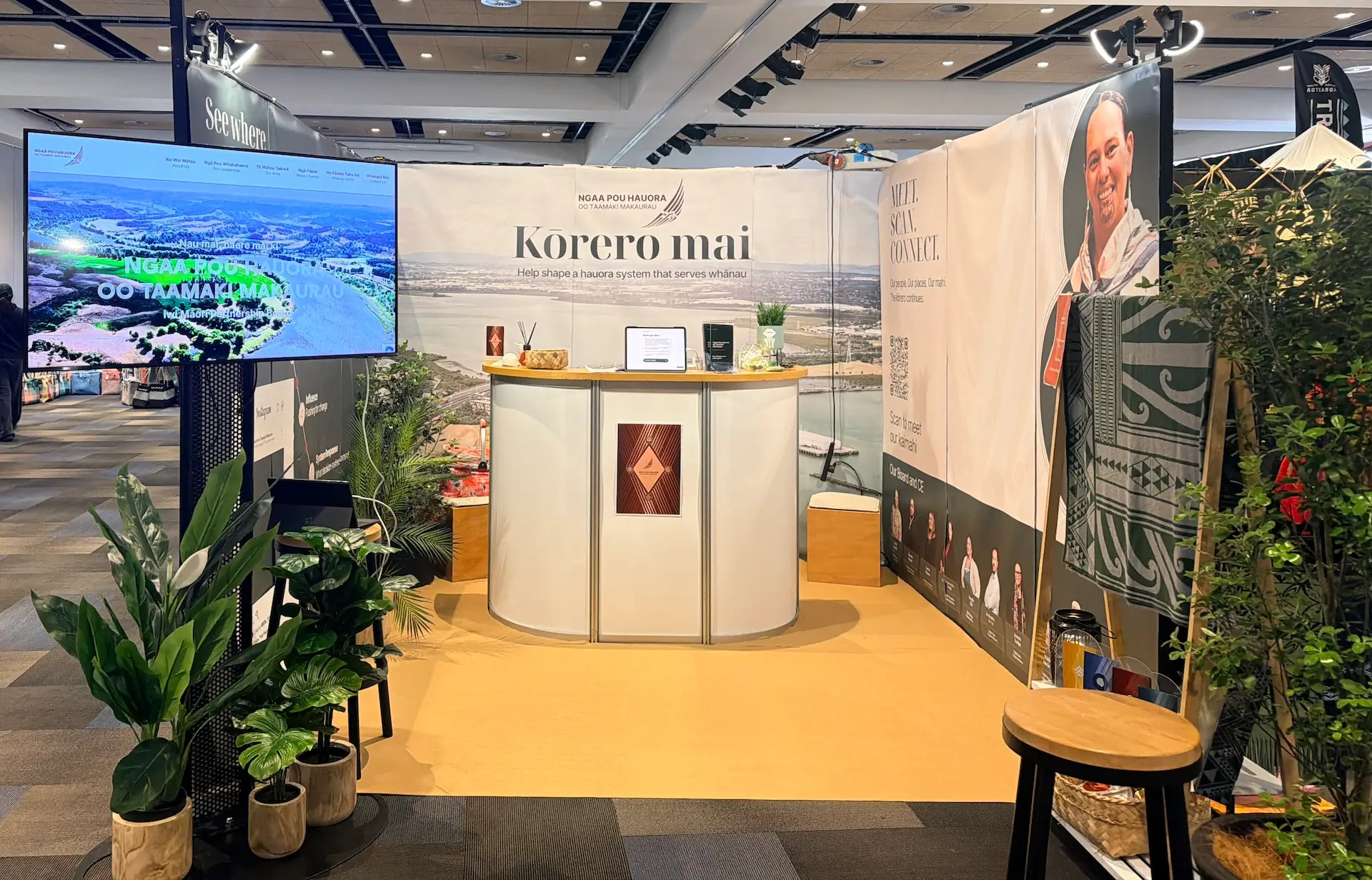
That depends on being where whānau are, including the gatherings where our people meet. Our stall at the conference is a place for wāhine and whānau to share what is working in hauora, what isn’t, and what needs to change. What we hear will feed into our advocacy, and we will report back on where it lands.
Ngaa Pou Hauora oo Taamaki Makaurau Iwi Māori Partnership Board’s Chief Executive Simon Royal says the League was doing whānau voice long before anyone called it that.
“These are women who have spent generations noticing what’s happening to their whānau and refusing to let it go unsaid,” he says. “Our job is to make sure that when whānau share their stories it goes somewhere. We’re not going to the conference to speak; we’re going to listen.”
Nau mai, haere mai
To every delegate travelling to Tāmaki Makaurau: nau mai, haere mai. May your time here be full of manaakitanga, reconnection and the kind of kōrero that sends you home stronger.
Ngaa Pou Hauora oo Taamaki Makaurau remains committed to listening, monitoring and advocating for hauora outcomes whānau Māori can see and feel.
Your voice. Your Hauora. Your future.